Living out the Buddha-Dharma

The eyes don’t say, “Sure we’re lower, but we see more.”
The eyebrows don’t reply, “Sure we don’t see anything, but we are higher up.”

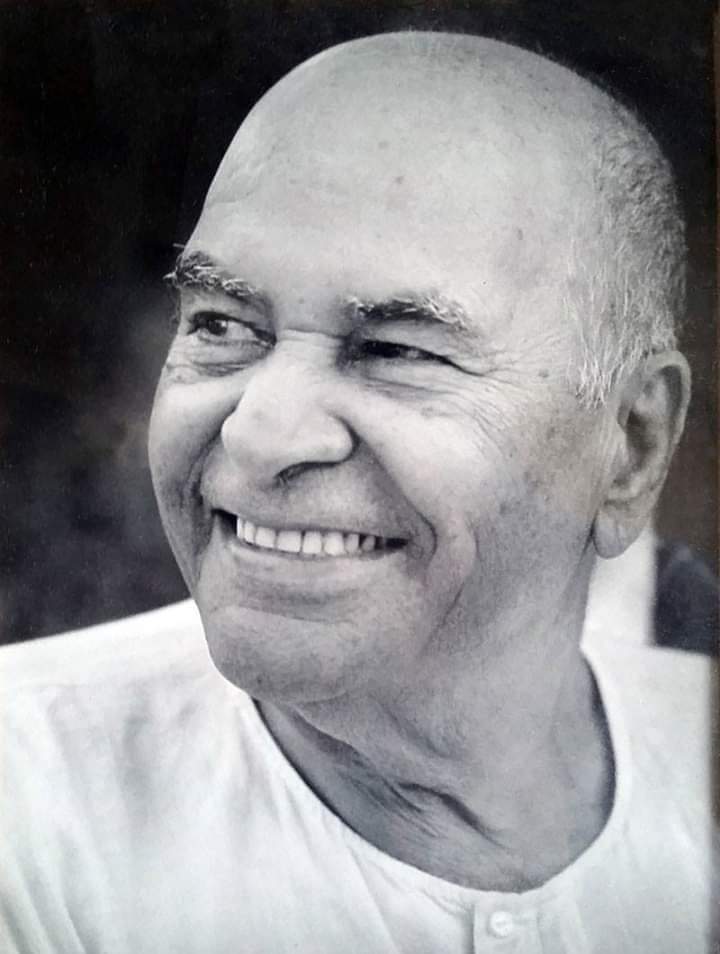
Living out the buddha-dharma means fulfilling your function completely without knowing that you’re doing it. A mountain doesn’t know it’s tall. The sea doesn’t know it’s wide and deep. Each and every thing in the universe is active without knowing it.

The bird’s singing and the flower’s laughter appear naturally,
completely independent from the person sitting in zazen at the foot of the cliff.

The bird doesn’t sing in honor of the person in zazen. The flower doesn’t blossom to amaze the person with her beauty. In exactly the same way, the person doesn’t sit in zazen in order to get satori. Every single being simply realizes the self, through the self, for the self.

– Kodo Sawaki, ’To You’

Our real nature

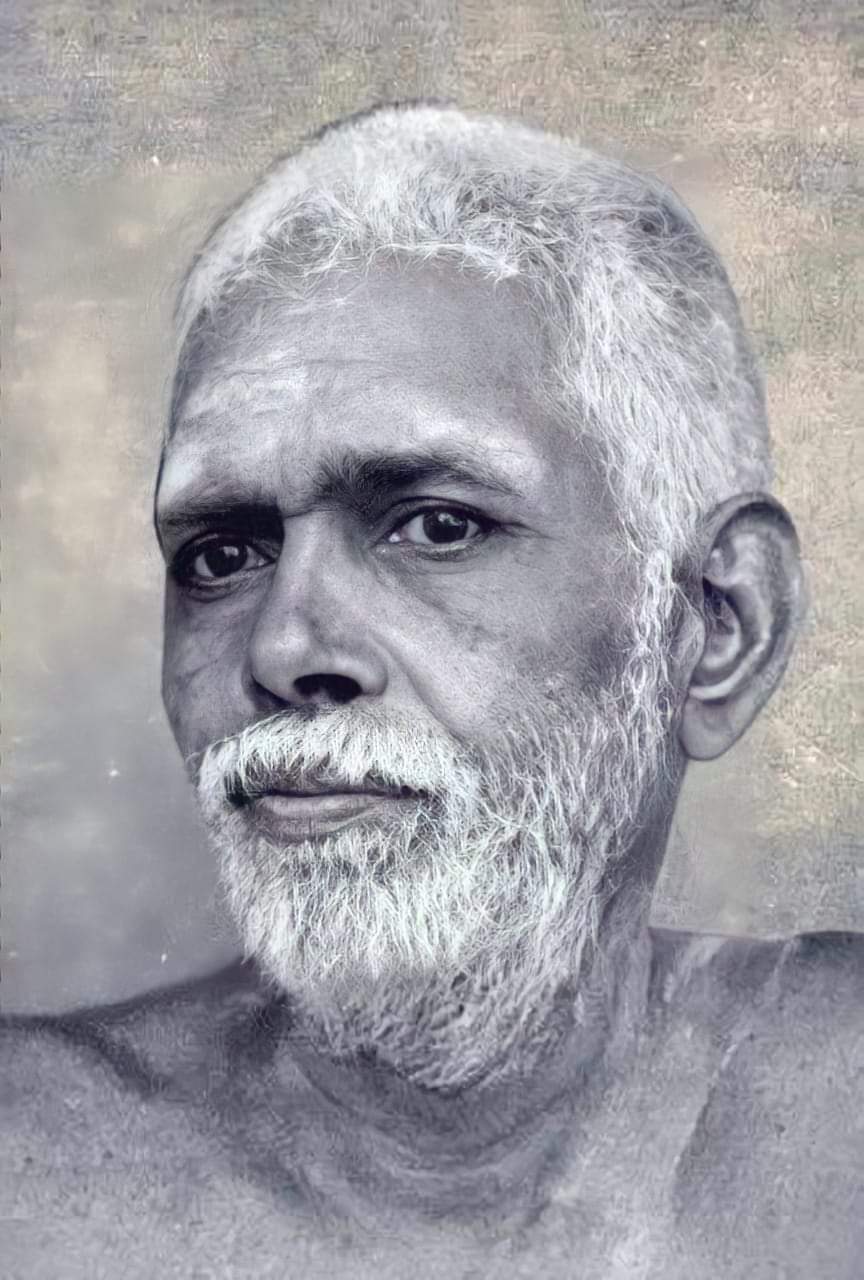
Our real nature is mukti (Liberation). But we are imagining we are bound and are making various, strenuous attempts to become free, while we are all the while free. This will be understood only when we reach that stage. We will be surprised that we were frantically trying to attain something which we have always been and are.

– Sri Ramana Maharshi

Practicing samadhi

When we practice peaceful samadhi, three experiences arise.
The first one is the experience of movement, which is likened to a waterfall coming down a steep mountain. When water falls down a steep mountain, it cannot be stopped even with great force. When one first meditates on stillness (Skt. shamatha) and insight (vipashyana), it is extremely difficult to control the mind. It is not possible to control it for a minute or even a second. When one gets distracted, if one thinks that it is impossible to control one’s mind and just gives up, that will not help.

If one wants to catch a monkey or a wild horse, one should first give it food and be gentle with it. In that way one can catch it. Once one gets hold of it, one can make it do whatever one wants. Similarly, if we try to catch the mind while it is wild, it is not possible to control it. Knowing that our mind is wild, we should develop renunciation and weariness when the mind is not weary. When we feel weary, tamed by that suffering, the mind will stay still. In that state of being tamed by suffering, we can develop stillness and insight. When we do not feel happy, according to the great beings from the past, that is the best time to develop samadhi.
Practicing samadhi with great diligence, in the future we will attain happiness and, eventually, the fruition of nonreturning. Thus we should rejoice and cheer the mind; in that state we can develop samadhi.

The second experience is the experience of achievement. What is achieved? We achieve a level that is quite peaceful compared to what we have had before. Once we have understood that our mind is like a waterfall coming down a mountain, we will not make the mind tense up, and it will be easier to meditate on stillness and insight. The strength of the wildness will let up. Properly concentrating on a visualization, our mind will be a little more steady than before. Even though the mind may be wild or drowsy, the force of that is not as strong as before. The mind is stronger because it is more used to samadhi. As wild as a horse may be, once it has been tamed, if one restrains it with a bridle and saddle, it will go wherever we want. In the same way, we can stabilize our samadhi a little bit. That is called the experience of achievement, which is like an ocean not stirred up by the wind.

The third experience happens when we get used to samadhi. When a yogin preaches samadhi, even if one shows him a hundred entertaining things, his mind will not be distracted in the least. He can completely control his mind through samadhi. Supported by the qualities of samadhi, the mind does not move. Even if we practice samadhi for many months or years, the mind will not become drowsy, sleepy, or weary. Even if we try to make it wild using desirable things, the mind will not be disturbed, because it has become steady. It is like a mountain on a great plain covered with a forest of all sorts of trees. No matter how much wind and rain come, the mountain cannot be moved.
To continue the samadhi practice, when drowsiness arises, we cheer the mind. When wildness arises, we tame it with mindfulness and awareness. In that way, we attain stability. When we get used to this, instead of being how we are now – cherishing ourselves above everyone else – if we meditate on bodhichitta, consider all sentient beings as our parents, give up anger toward enemies and attachment to friends, we will cherish other sentient beings above ourselves. We will not feel anger or attachment to others, and we will also not have anger or attachment to ourselves. This will come gradually as we get used to the practice.

Kyabje Dilgo Khyentse Rinpoche – Pure Appearance – Collected Works Vol III pp 539-40, Shambhala

These gems collected from Dharma Samye

An inevitable course of awakening

We are on an inevitable course of awakening. If you understand that message deeply, it allows you to enter into your spiritual practices from a different perspective, one of patience and timelessness.

You do your practices not out of a sense of duty or because you think you should, but because you know in your soul there really is nothing else you would rather do.

– Ram Dass, excerpt from Polishing the Mirror: How to Live from Your Spiritual Heart.

What are you waiting for?

Q: I asked Mother in Sri Aurobindo Ashram the following question: To keep my mind blank without thoughts arising so that God might show himself in his true being.
But I do not perceive anything. The reply was to this effect:
The attitude is right. The power will come down from above . It is a direct experience / Should I do anything further?

A: Be what you are. There is nothing to come down or become manifest. All that is necessary is to lose the ego. That which is, is always there. Even now you are that. You are not apart from it.
The blank is seen by you. You are there to see the blank.

What do you wait for? The thought, ‘I have not seen’, the expectation to see and the desire of getting something, are all the workings of the ego. You have fallen into snares of the ego. The ego says all these
and not you. Be yourself and nothing more!

Once born you reach something. If you reach it you return also.
Therefore leave off all this verbiage. Be as you are. See who you are and remain as the Self, free from birth, going, coming and returning.

– Sri Ramana Maharshi

Surrendering

God, on being worshipped, bestows steadiness in devotion which leads to surrender. On the devotee surrendering, God shows His mercy by manifesting as the Guru. The Guru, otherwise God, guides the devotee, saying that God is in you and He is the Self. This leads to introversion of the mind and finally to realization.

When a person has realized, a universal life-current takes possession of him and he becomes an instrument in its hands. His own separate will is gone. This is the real Self-surrender. This is the highest kundalini (the divine cosmic energy), this is real bhakti (devotion), this is jnana (knowledge of the Self).

– Sri Ramana Maharshi

Recognizing the nature of samsara

Recognizing the nature of samsara, you will feel weary of it, and such weariness will inspire you to strive toward liberation-and by striving for it, you will attain it. Samsara will never just disappear on its own. You have to want to get rid of it actively yourself.

If you acknowledge the suffering of samsara, you will recognize that the source of suffering lies in your obscuring emotions and the negative actions they engender, and that the source of your obscuring emotions lies in your clinging to the idea of self. If you can rid yourself of that clinging, suffering will cease.

Liberation means freeing yourself from the ties of your emotions and negative actions. The way to free yourself from them is to practice the Dharma-to train in discipline; in concentration; and in prajna, the wisdom that allows you to realize the non-existence of the individual self and phenomena. Discipline is the basis of concentration; concentration is the basis of wisdom. If you practice the Dharma properly, even for as little as an hour a day, the results of countless lifetimes and kalpas of negative actions can be purified.
As you practice the Dharma steadily, even in quite a modest way, you will gradually be able to progress further and further on the path to liberation. Eventually, you will attain a true bliss that can never diminish.

– Dilgo Khyentse Rinpoche, The Heart of Compassion

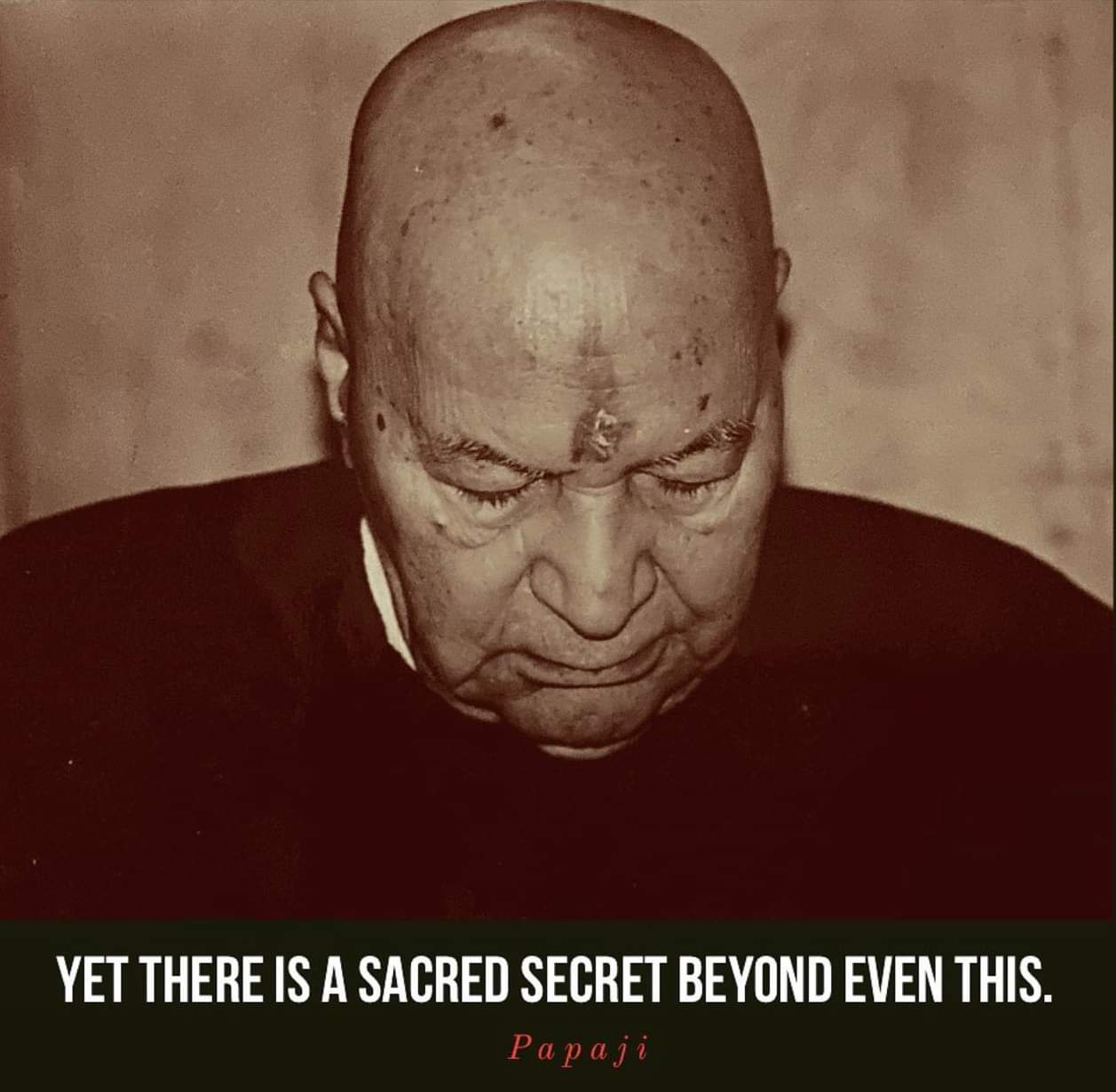
Anything which you have concealed the nature of your own Self has to be discovered

Do what you have to do. Anything with which you have camouflaged or concealed the original ultimate nature of your own Self has to be discovered, uncovered, or revealed.

It has to reveal itself by itself — not by any effort. Not by any effort.

Don’t think about anything of the past, present and future. No thought and no effort. That is the requirement. This gem doesn’t need your candle to be seen. It has its own luster, self-effulgent. You will not see the sun with the light of your candle but through the sun’s own rays. Who needs a candle to see the sun? No candle is needed because the sun has the luster of light itself. So you don’t need any effort to see anything which is light.

– Papaji

Surrender,
let Silence have you.

Surrender to the source,
Surrender to awareness,
this is the only place of protection.

Surrender your heart and you will know all. Surrender to Consciousness and Bliss.

Surrender means to surrender your bondage and to simply be Freedom.

– Papaji

You are loved

You are loved just for being who you are, just for existing. You don’t have to do anything to earn it. Your shortcomings, your lack of self-esteem, physical perfection, or social and economic success— none of that matters. No one can take this love away from you, and it will always be here.

Imagine that being in this love is like relaxing endlessly into a warm bath that surrounds and supports your every movement, so that every thought and feeling is permeated by it. You feel as though you are dissolving into love.

This love is actually part of you; it is always flowing through you. It’s like the subatomic texture of the universe, the dark matter that connects everything. When you tune in to that flow, you will feel it in your own heart—not your physical heart or your emotional heart, but your spiritual heart, the place you point to in your chest when you say, “I am.”

– Ram Dass