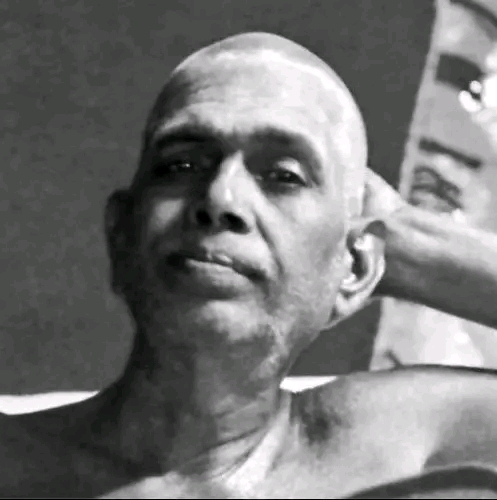
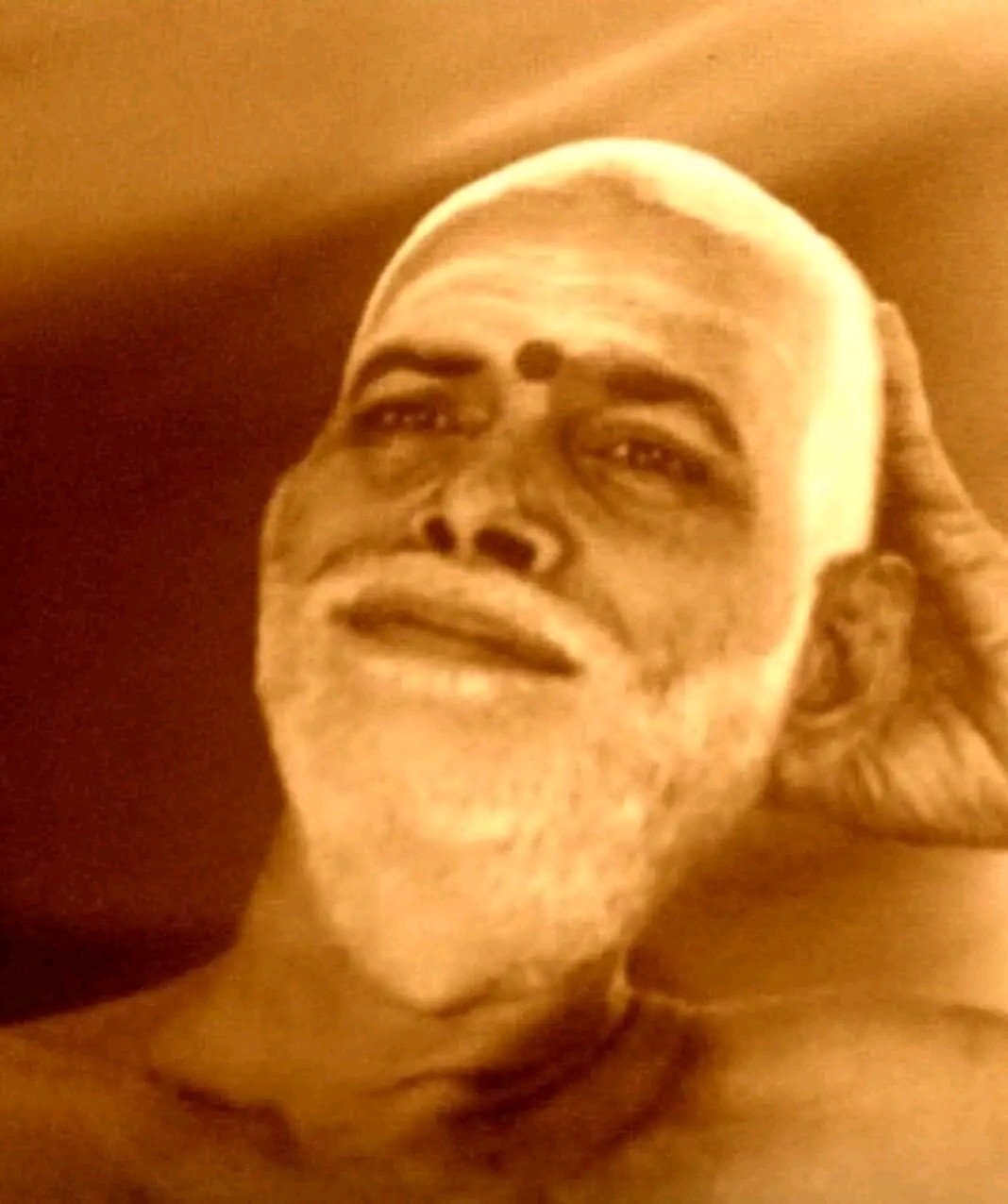
As time went by, people throughout the world came to know that Sri Bhagavan was the living embodiment of all that is taught in the Gita, Tirukkural, and Upanishads, and were attracted to His Feet. Forgetting the national differences such as Indian and foreigner and the religious differences such as Hindu, Muslim, Christian, Buddhist, Jain and Sikh, from far and abroad they flocked to the Feet of Sri Bhagavan and adored Him, for such was their conviction that He was indeed the Guru of their own religion! Many among them achieved true knowledge, some by merely seeing Sri Bhagavan, some by living in His divine Presence, some by dedicating themselves wholeheartedly to His service, and some by following His teachings.
The former president of India, Mr. Rajendra Prasad, once went to the asramam of Mahatma Gandhi and said, “Bapuji, I have come to you for peace!” The abode of peace was known well to Gandhiji and hence he advised, “if you want peace, go to Sri Ramanasramam and remain for a few days in the presence of Sri Ramana Maharshi, without talking or asking any question.”
Mr. Rajandra Prasad accordingly arrived at Sri Ramanasramam on 14th August 1938. Though those who accompanied him spent their time in asking Sri Bhagavan questions regarding spiritual matters and in visiting all the places on the Hill where He had lived, Mr. Rajendra Prasad did not move away from the Presence of Sri Bhagavan. Besides, according to the advice of Gandhiji, he spent the whole of that week without raising any question or doubt.
At the time of his taking leave of Sri Bhagavan, he approached Him and humbly enquired, “O Bhagavan, it was Gandhiji himself who sent me here. Is there any message that I may take to him?”
Sri Bhagavan graciously answered :
“The same Power which works here is working there also! Where is the need for words when heart speaks to heart?”
These are unique words of wisdom revealing the secret that it is the one Supreme Thing alone that governs the whole universe through all the innumerable souls! Just like Rajendra Prasad and Gandhiji, all men of high position and power, all great poets, scholars, politicians, philosophers and religious leaders who lived in our country during His time praised the glory of His Jnana.